Retaining Walls: Timber vs Concrete vs Stone
Not all retaining walls are created equal – and in Moorabool Shire, where heavy clay soils, seasonal moisture swings, and sloped blocks are the norm, the material you choose makes a significant difference to how long your wall lasts and what it costs over time.
We build retaining walls across Bacchus Marsh and the surrounding region every week. The questions we get asked most are: What’s the difference between timber, concrete, and stone? Which one should I choose? And what’s it going to cost?
This guide answers all three.
Why Material Choice Matters More in Moorabool
Moorabool’s predominant soil type is reactive clay. It swells when wet and shrinks when dry – sometimes dramatically across a single season. That constant movement creates lateral pressure on retaining walls that, over time, causes even well-built structures to shift or fail if the material and drainage aren’t right for the conditions.
What works on a sandy coastal block won’t necessarily work here. The right choice depends on your wall height, the loads it needs to support, your budget, and how long you want it to last.
Timber Sleeper Walls
Timber sleeper walls are the most common entry-level retaining solution in Australia. They’re cost-effective, quick to install, and look natural in residential garden settings.
Pros
- Lower upfront cost than concrete or stone
- Faster to install – less labour-intensive
- Warm, natural aesthetic that suits most gardens
- Suitable for low, non-structural walls under 600mm
Cons
- Shorter lifespan – treated pine typically lasts 15–25 years before deteriorating
- Susceptible to moisture damage, particularly in clay soils with poor drainage
- Not appropriate for walls over 1m without engineering input
- Likely to need replacement sooner than concrete or stone alternatives
Cost (Installed)
$250–$400 per lineal metre for a standard treated pine sleeper wall, depending on height and drainage requirements.
How Timber Holds Up in Moorabool
15–25 years with proper drainage. Moorabool’s clay retains moisture heavily – without adequate ag pipe and drainage aggregate behind the wall, expect accelerated timber decay and potential failure well inside that window.
Concrete Block Walls
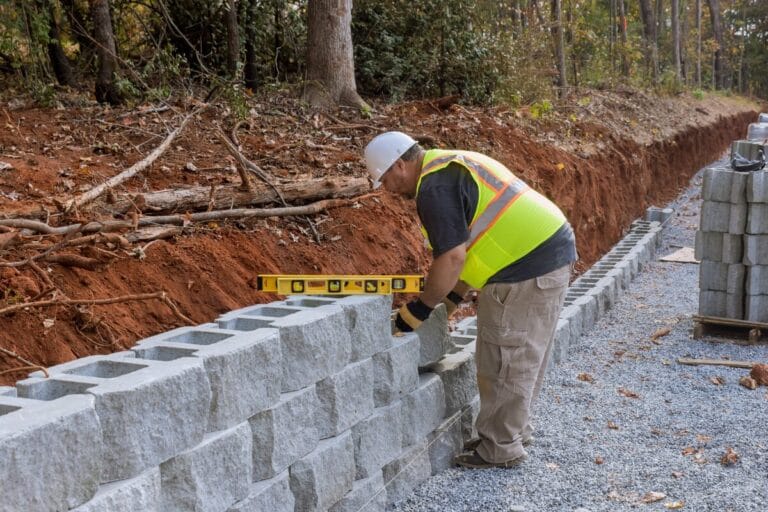
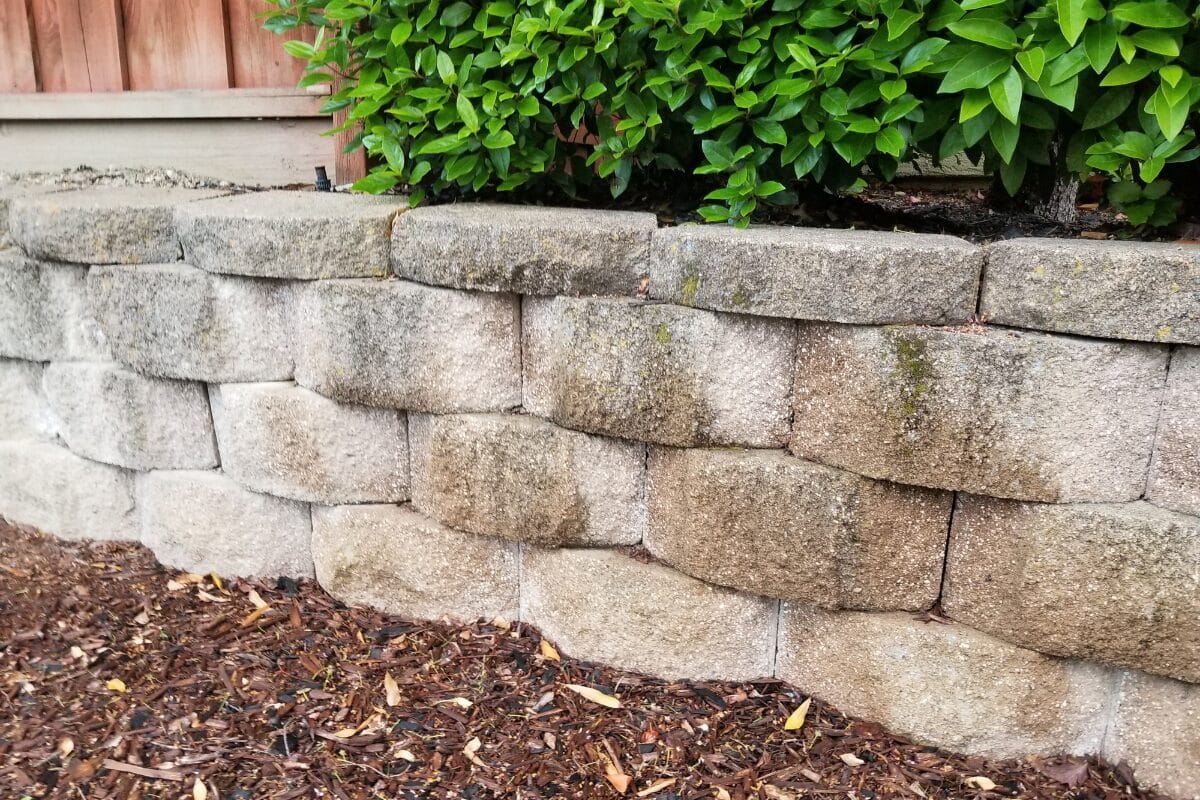
Concrete segmental retaining walls – using interlocking blocks like Versa-Lok or Allan Block – are the most structurally reliable option for walls above 800mm, or anywhere engineering certification is required.
Pros
- Engineered for structural performance – handles significant earth loads
- Long lifespan of 50+ years when built correctly
- Suitable for taller walls with geogrid reinforcement where needed
- Clean, modern finish that suits contemporary homes
Cons
- Higher upfront cost than timber
- Requires proper base preparation and drainage – shortcuts lead to failure
- Less visually warm than natural stone or timber in some settings
Cost (Installed)
$350–$600 per lineal metre, depending on wall height, block type, and drainage requirements. Engineering fees – typically $500–$1,500 for a residential wall – are additional where required.
How Concrete Block Holds Up in Moorabool
50+ years. Concrete block is the most resilient option for reactive clay soils. The expansion and contraction cycles that damage timber walls have minimal effect on properly engineered concrete block construction – provided the drainage is designed correctly from the start.
Brick and Stone Walls
For premium aesthetics and heritage-style properties, brick or natural stone delivers a finish that timber and concrete block simply can’t match. These are commonly chosen for front yard feature walls, visible garden terracing, and high-end renovations.
Pros
- Premium visual result that adds genuine kerb appeal and property value
- Excellent durability when properly constructed – 50 to 100+ years
- Works across a wide range of architectural styles, from heritage brick to contemporary sandstone
- Natural materials that improve with age
Cons
- Highest upfront cost of the three options
- Requires skilled tradespeople – not a job for unlicensed operators
- Mortar joints need occasional repointing over time
- Natural stone can be harder to source and match for future repairs
Cost (Installed)
$500–$900+ per lineal metre for brick or natural stone. Large-format stone feature walls can exceed this depending on material selection and complexity.
How Brick and Stone Hold Up in Moorabool
50–100+ years for quality construction. Like concrete block, the durability advantage over timber is substantial in clay soil environments – and the aesthetic return makes the cost easier to justify for visible, high-traffic areas of your property.
Side-by-Side Comparison
| Wall Type | Cost (per lm) | Lifespan | Maintenance | Best For |
|---|---|---|---|---|
| Timber Sleeper | $250–$400 | 15–25 years | Low–Medium | Low walls, tight budgets, natural aesthetic |
| Concrete Block | $350–$600 | 50+ years | Low | Structural walls, slopes, engineered applications |
| Brick / Stone | $500–$900+ | 50–100+ years | Low (occasional repointing) | Premium finish, feature walls, heritage properties |
Which Is Best for Moorabool Conditions?
There’s no single right answer – it depends on your wall’s height, what it’s supporting, how visible it is, and your budget. Here’s how we generally guide clients:
- Low walls under 600mm in garden settings: Treated timber sleepers are perfectly appropriate, provided drainage is included in the build.
- Walls between 600mm and 1.2m on clay-heavy sites: Concrete block is worth the additional investment. The longer lifespan and structural advantage justify the cost difference over timber.
- Walls over 1.2m or supporting a load (driveway, structure): Concrete block with geogrid reinforcement, or engineered stone construction. No shortcuts.
- Visible feature walls and premium finishes: Natural stone or quality brick – these add real, lasting value to your property.
Drainage: The Factor That Determines Whether Your Wall Lasts
Regardless of which material you choose, drainage is the single biggest factor in retaining wall longevity on Moorabool properties. The excavation and drainage work behind a retaining wall isn’t just preparation – it’s structural. A wall with no drainage behind it is essentially a dam, and hydrostatic pressure will eventually win.
Every retaining wall we build includes ag pipe at the base, drainage aggregate (not backfilled clay), weep holes at appropriate intervals, and surface grading to direct water away from the wall face.
If you’re comparing quotes and drainage hasn’t been mentioned, ask about it specifically. It’s not an optional add-on.
What Does a Retaining Wall Cost in Bacchus Marsh Overall?
Wall material is only part of the total cost. For a full picture of what retaining walls cost in Bacchus Marsh – including excavation, engineering, and drainage – we’ve broken that down separately.
Get a Quote for Your Retaining Wall
Every site in Moorabool is different — slope, soil depth, access, and what you’re retaining all shape the right solution. We’re happy to walk your block and give you a clear recommendation before you commit to anything.