

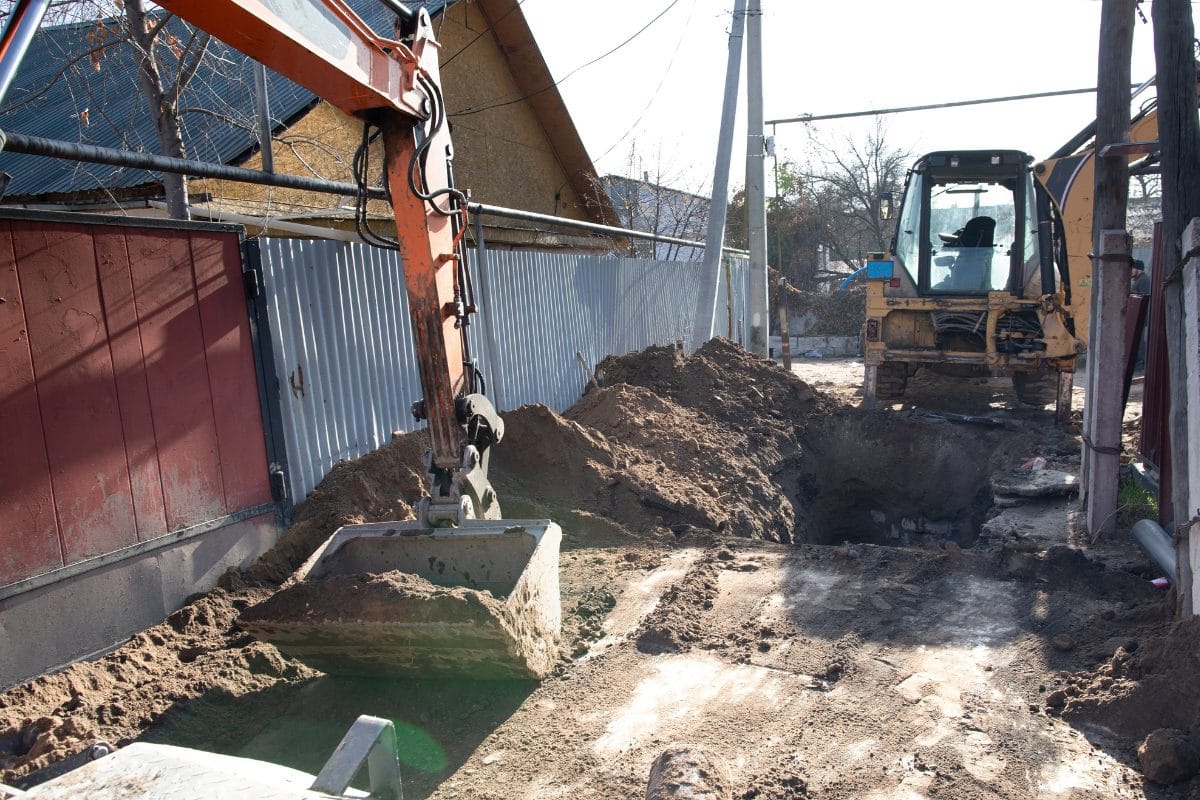
Driveway Excavation: What’s Involved Before Concreting or Paving?
Most homeowners focus on the surface finish when planning a new driveway – the concrete type, the paver colour, the pattern. But the work that happens before a single drop of concrete is poured determines whether that surface lasts five years or thirty. This is what proper driveway excavation involves, why it matters, and what it costs in Bacchus Marsh and greater Melbourne.
Why Excavation Determines Driveway Longevity
Driveway failure – cracking concrete, uneven pavers, surface heaving – almost always originates below the surface. Without adequate depth, a compacted base, and correct drainage, no surface material performs as it should. In Moorabool’s reactive clay soils, skipping or shortcutting excavation is the single most reliable way to guarantee premature failure.
Step 1: Site Assessment and Planning
Before any machinery moves, we assess the site to determine excavation depth, drainage requirements, and access constraints. On a standard residential driveway in Bacchus Marsh, this means checking soil type, existing fall and grade, proximity to structures, tree root zones, and underground services.
Moorabool’s clay-heavy soils require particular attention here. Reactive clay expands when wet and contracts when dry – a behaviour that creates movement beneath any rigid surface. Understanding the soil profile before excavation starts shapes every decision that follows.
We use Dial Before You Dig (Australia’s national underground service locating service) on every project before ground is broken. Striking an unidentified cable or pipe adds cost and delay that a five-minute check prevents entirely.
Step 2: Removal of Existing Materials
Where an existing driveway is being replaced, all old material – concrete, asphalt, pavers, or compacted gravel – is broken up and removed before excavation begins. This isn’t optional; laying a new base over failed old material simply buries the problem.
Demolition and removal of a standard double concrete driveway (approximately 40–50m²) typically takes half a day with a mini-excavator and skip bin. Disposal is included in our quotes – what goes off your site gets disposed of correctly.
Step 3: Excavation and Sub-Base Preparation
With the site clear, excavation removes soil to the required depth. For a standard residential driveway in Bacchus Marsh, this means:
- Concrete driveways: 150–200mm total depth – typically 100mm compacted road base plus 100mm concrete slab
- Paved driveways: 180–230mm total depth – 100–150mm compacted road base plus bedding sand plus paver thickness
- Heavy vehicle access (trailers, utes, frequent truck movements): 200–250mm total depth with reinforced base
On reactive clay sites – which describes most of Bacchus Marsh – we excavate deeper than the minimum and remove clay from the sub-base zone entirely, replacing it with crushed rock. Clay left under a driveway base continues to move with moisture, and that movement transfers directly to the surface above it.
Step 4: Grading and Drainage
Correct fall is established during excavation – not after. A driveway needs a minimum 1–2% cross-fall or longitudinal fall to shed water away from the house and off the surface. Get this wrong at the excavation stage and you’re correcting it at finishing, which is expensive and imprecise.
On sites where surface drainage alone is insufficient – common on Bacchus Marsh blocks where water pools at the base of a slope – sub-surface drainage is installed at this stage. This typically means agricultural drainage pipe (ag pipe) in a gravel trench, directing water to a stormwater outlet or absorption trench.
Poor drainage is the leading cause of retaining wall and driveway failure on Moorabool properties. Addressing it during excavation and earthworks costs a fraction of what it costs to fix after a surface has been laid.
Step 5: Compaction
Road base material is laid and compacted in layers – typically two 50mm lifts rather than one 100mm pour – using a vibrating plate compactor or roller. Each layer must reach adequate compaction before the next goes down.
This step is where shortcuts most commonly occur on low-cost installs. Inadequately compacted base material settles over time, causing the surface above it to crack, dip, or shift. There is no fixing this without removing the surface and starting again.
On projects requiring engineered certification – typically commercial applications or driveways supporting heavy loads – compaction testing (a nuclear densometer test or sand replacement test) is conducted and documented before surface works begin.
Step 6: Readiness Check Before Surface Goes Down
Before concreting or paving begins, we verify the base is level to specification, fall is correct, drainage outlets are clear and functional, and compaction is consistent across the full area. This is the last point at which base issues can be corrected without cost penalty – and we treat it as such.
Common Excavation Mistakes and What They Cost to Fix
- Insufficient depth: Base compresses under load; surface cracks or dips. Repair requires full removal and re-excavation – typically $3,000–$8,000 for a standard driveway.
- Clay left in sub-base: Seasonal movement causes heaving and cracking. Same remediation cost as above.
- No drainage provision: Water pools under or around the driveway, saturating the base and accelerating movement. Retrofitting drainage after a surface is laid costs $1,500–$4,000+.
- Incorrect fall: Water drains toward the house or pools on the surface. Correction after pour requires grinding or resurfacing – $500–$2,000 depending on severity.
- Services not located: Striking a water main, gas line, or electrical conduit during excavation. Cost varies widely; delay is guaranteed.
What Does Driveway Excavation Cost in Bacchus Marsh?
Excavation cost depends on site size, depth required, soil conditions, and whether existing material needs removal. For typical residential driveways in Bacchus Marsh and greater Melbourne in 2026:
- Standard double driveway (40–50m²), no existing surface: $1,200–$2,500
- With removal of existing concrete or pavers: Add $800–$1,500
- Sites requiring deep excavation or clay removal: Add $500–$1,200
- Sub-surface drainage installation: Add $800–$2,500 depending on scope
These figures represent excavation only – surface installation (concrete or paving) is additional. A full driveway project cost breakdown is covered in our comparison of paving vs concrete driveways.
Typical Project Timelines
- Excavation and base preparation (standard residential driveway): 1–2 days
- Including demolition and removal of existing surface: 2–3 days
- Concrete pour (after base): 1 day; 7 days before vehicle use
- Paving (after base): 1–3 days depending on size; usable immediately
Your Next Steps
- Don’t accept a quote that doesn’t itemise base preparation – if excavation depth, road base specification, and drainage aren’t explicitly stated, ask for them in writing
- Check your site’s drainage – if water currently pools on or near your existing driveway, it needs to be addressed at the excavation stage, not after
- Budget for the base, not just the surface – base preparation typically represents 25–35% of total driveway project cost; it’s not where to cut corners
- Get a site visit before committing – soil conditions, slope, and access all affect scope; a quote based on m² alone without a site inspection is unreliable
Get a quote for driveway excavation in Bacchus Marsh →
Frequently Asked Questions
How deep should a driveway be excavated?
For a standard residential concrete driveway, total construction depth is 150–200mm – typically 100mm compacted road base plus a 100mm concrete slab. Paved driveways require similar depth plus bedding sand and paver thickness. Clay sites and heavy-use driveways require greater depth.
Do I need a permit for driveway excavation in Moorabool?
A crossover permit from Moorabool Shire Council is required for the section connecting your driveway to the public road. Excavation and construction on private property generally doesn’t require a separate permit, though underground service location (Dial Before You Dig) is mandatory before any ground is broken.
Can you excavate close to a house foundation?
Yes, with care. Excavation within 1–2 metres of a foundation requires assessment of footing depth and soil bearing conditions. We assess this at the site visit stage and adjust methodology accordingly to avoid undermining existing structures.
Why is road base used instead of just compacting the existing soil?
Crushed rock road base provides a stable, free-draining load-bearing layer that native soil – particularly reactive clay – cannot consistently provide. Native soil moves with moisture; compacted road base doesn’t. Laying concrete or pavers directly on prepared soil, even compacted, significantly increases failure risk on clay-dominated sites like most of Bacchus Marsh.
The Bottom Line
Excavation and base preparation is the unglamorous part of a driveway project – you won’t see it once the surface is down. But it’s what every other part of the job depends on. A surface laid on a correctly prepared base will perform for decades. The same surface on poor preparation will show problems within a few years, and fixing it means starting over.
If you’re planning a new driveway in Bacchus Marsh or the surrounding Moorabool area, we’re happy to walk the site and give you a clear picture of what’s underneath before anything is quoted or committed.