

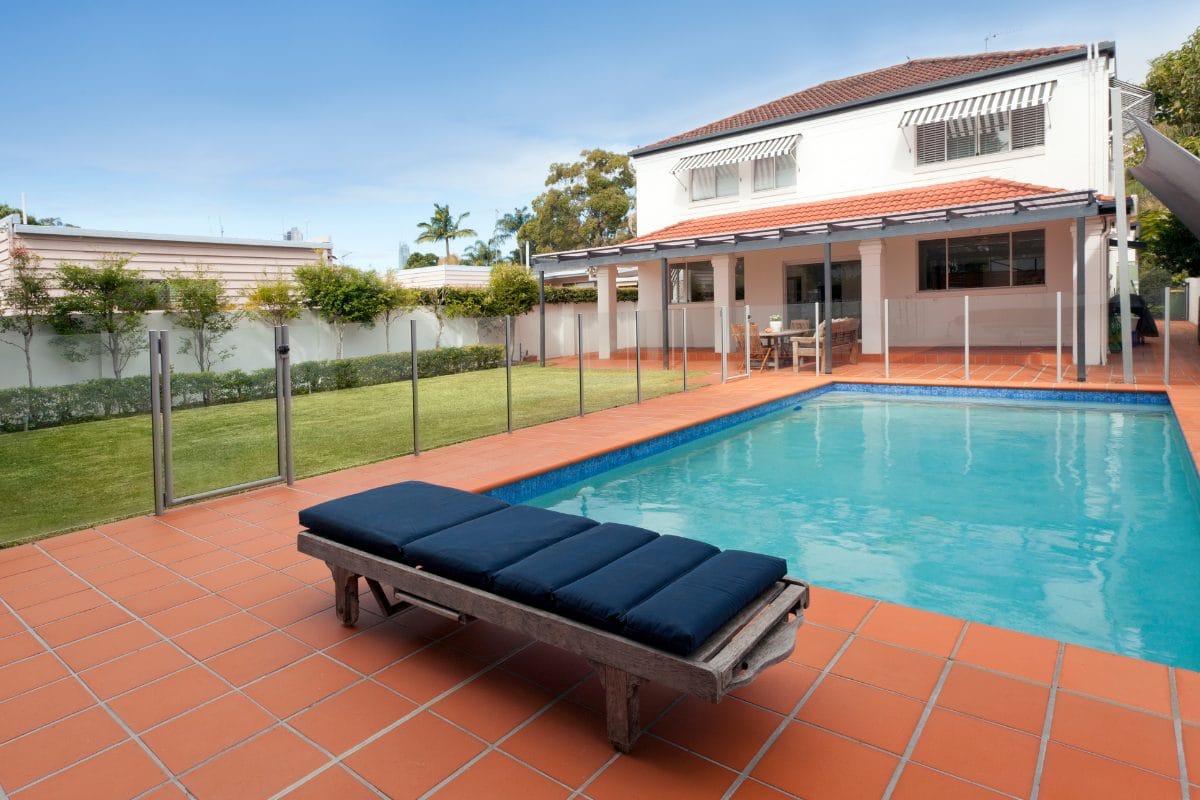
Pool Landscaping Mistakes That Cost Thousands
Pool landscaping is one of the highest-value services we quote as part of our landscape construction work – and one of the most commonly botched by operators without pool-specific experience. In our work across Bacchus Marsh and greater Melbourne, the same six mistakes account for the vast majority of remediation calls we receive. Getting pool landscaping wrong doesn’t just look bad – it creates safety liabilities, equipment damage, and compliance failures that cost significantly more to fix than to prevent.
Why Pool Landscaping Fails More Often Than Other Garden Work
Pool surrounds sit at the intersection of landscaping, structural drainage, and legal compliance (fencing). Poor drainage, wrong material choice, non-compliant fencing, and inadequate access are the errors we see most, and each one compounds over time rather than resolving itself.
Mistake #1: Poor Drainage Around the Pool
Poor drainage design causes water to pool at the pool’s edge, undermine paving, and infiltrate the pool shell surrounds – accelerating erosion and cracking. On Moorabool’s reactive clay, this failure mode appears faster and more severely than on sandy or loam soils.
Pool surrounds need a fall away from the pool coping – typically 1:80 to 1:100 – directing water to a stormwater outlet or absorption zone, not back toward the pool or the house. Pool backwash water (discharged during filter cleaning) also needs a legal disposal point; in Moorabool Shire this generally means directing it to the sewer via a licensed plumber, not onto the lawn or garden beds, where chlorine and salt concentrations damage plants and soil structure over time.
We handle drainage design as part of every earthworks and excavation scope on pool projects – including backwash disposal points, which are frequently overlooked entirely on lower-cost quotes.
Mistake #2: Wrong Surface Materials
Surface material choice around a pool needs to balance three factors simultaneously: slip resistance when wet, heat retention in direct summer sun, and chemical resistance to chlorinated splash-out. Materials chosen purely for appearance often fail on one or more of these.
Polished porcelain and glossy tiles look premium but become dangerously slippery when wet – a genuine safety issue around a pool used by children. Dark-coloured pavers and stone absorb heat and can reach uncomfortable, sometimes burn-risk temperatures on 35°C+ Melbourne summer days. Untreated natural stone can also stain or etch from chlorine and salt exposure over time.
Products like textured porcelain pool pavers, honed bluestone, and light-toned exposed aggregate concrete perform well across all three factors – light colours reflect heat, textured finishes provide slip resistance, and sealed surfaces resist chemical staining.
Mistake #3: Non-Compliant Pool Fencing
Victorian pool fencing must meet the Building Regulations 2018 and AS1926.1 – minimum 1200mm height, no climbable objects within 900mm of the fence, gates that self-close and self-latch, and specific gap requirements between pickets and beneath the fence. Non-compliant fencing is one of the most searched pool-related topics in Victoria, and for good reason: it’s also one of the most commonly failed items during council inspection or at point of sale.
Since December 2020, all Victorian pool and spa owners have been required to register their pool with their local council and have the barrier inspected at least every four years. Non-compliance can result in enforcement notices, and – critically – a pool barrier that doesn’t comply is a genuine drowning risk, not just a paperwork issue.
Key compliance requirements under AS1926.1:
- Minimum fence height of 1200mm, measured from finished ground level
- No gaps greater than 100mm at the base of the fence or between vertical members
- No climbable objects (furniture, pot plants, air conditioning units, sloped ground) within 900mm of the fence on the outside
- Self-closing, self-latching gates opening away from the pool, with the latch release mechanism at least 1500mm from the ground or otherwise childproofed
- Windows and doors opening directly onto the pool area may need to be permanently fixed or fitted with additional barriers, depending on configuration
Landscaping decisions directly affect compliance – retaining walls, garden beds, and even mature plants placed too close to a fence line can inadvertently create a climbable zone that fails inspection. If your pool area involves a retaining wall near the boundary, it’s worth understanding council approval requirements in Moorabool alongside pool fencing rules, since both can apply to the same section of yard. We factor fencing compliance into the landscape design itself, not as an afterthought once planting is finished.
Mistake #4: Inadequate Access for Maintenance
Pool equipment – filters, pumps, chlorinators, heat pumps – needs regular access for servicing. Landscaping that boxes equipment in behind dense planting, narrow gaps, or across uneven ground significantly increases the cost and difficulty of routine maintenance and repairs.
We plan a minimum 600mm clear access path to all pool equipment during the design stage, with hard, level, non-slip surfacing – not lawn or loose mulch, which becomes difficult to traverse when carrying tools or replacement parts.
Mistake #5: Plants That Damage Pool Equipment or Water Quality
Certain plant choices around pools create ongoing, avoidable problems. Deciduous trees and large-leafed species drop material into the pool, clogging skimmer baskets and staining pool surfaces with tannins. Aggressive root systems from species like willows, poplars, and some eucalypts can crack pool shells, coping, and surrounding paving over time. Thorned or spiky plants near pool edges create injury risk in an area where people are frequently barefoot.
We recommend low-litter, non-invasive species – ornamental grasses, strappy-leafed natives like lomandra and dianella, and clumping palms – positioned with appropriate setback from the pool shell and equipment. This planting selection is handled as part of our broader turf and garden installation service, so it’s coordinated with the same drainage and access considerations as the rest of the site.
Mistake #6: No Consideration for Sun and Shade Patterns
Pool landscaping designed without mapping the sun path across the day and across seasons frequently results in either a pool area that’s uncomfortably hot with no shade relief, or shade structures placed where they block winter sun without adding meaningful summer benefit. Melbourne’s sun angle shifts substantially between summer and winter, and a shade solution that works in January can leave an outdoor area cold and shadowed in July.
We map sun exposure at the design stage and position shade sails, pergolas, or strategic tree planting to provide relief during peak summer heat without compromising winter usability.
Real-World Observation: What We See on Bacchus Marsh Pool Projects
In our experience assessing pool landscaping across Moorabool, drainage and fencing issues account for the large majority of remediation calls – considerably more than surface material or planting complaints combined. The pattern is consistent: pool installations completed by pool builders (whose scope typically ends at the pool shell and coping) are frequently landscaped afterwards by a separate contractor without pool-specific compliance knowledge, and the drainage and fencing details fall through the gap between the two trades.
We coordinate directly with pool builders and certifiers on new pool projects specifically to close this gap – drainage falls, backwash disposal, and fence compliance are planned before the surrounding hardscape goes in, not retrofitted afterwards.
Your Next Steps
- Confirm your pool fence complies with AS1926.1 before any landscaping is finalised around it – retrofitting compliance after garden beds and paving are installed is significantly more expensive
- Plan drainage falls and backwash disposal at the design stage, not after the pool is filled
- Choose surface materials rated for slip resistance and heat performance, not appearance alone
- Map sun and shade patterns across the full year before committing to shade structures or tree planting
- Get a landscaper who coordinates directly with your pool builder or certifier, particularly on new pool installations
Get a quote for pool landscaping in Bacchus Marsh →
Frequently Asked Questions
What height does a pool fence need to be in Victoria?
Pool fences in Victoria must be a minimum of 1200mm high, measured from finished ground level, under AS1926.1 and the Building Regulations 2018. Gaps at the base or between vertical members cannot exceed 100mm, and no climbable object can sit within 900mm of the fence on the outside.
Do I need to register my pool with council in Victoria?
Yes. Since December 2020, all pool and spa owners in Victoria must register their pool with their local council and have the safety barrier inspected at least once every four years. Non-compliant barriers can result in enforcement action from council.
Can I landscape close to a pool fence?
Yes, but garden beds, retaining walls, and mature plants must be positioned so they don’t create a climbable surface within 900mm of the fence on the outside. This is assessed as part of the landscape design, not left to chance after planting is complete.
What’s the best paving for around a pool in Melbourne?
Light-coloured, textured surfaces perform best – options like textured porcelain pool pavers, honed bluestone, and light exposed aggregate concrete balance slip resistance, heat reflection, and chemical resistance to chlorine and salt splash-out better than polished or dark-toned alternatives.
The Bottom Line
Pool landscaping mistakes are expensive precisely because they compound – poor drainage undermines paving, non-compliant fencing risks both safety and enforcement action, and the wrong plant choices create years of avoidable maintenance. Every one of these issues is preventable with the right design decisions made before construction starts, not after.
If you’re planning pool landscaping in Bacchus Marsh or greater Melbourne, we coordinate with your pool builder from the outset to get drainage, fencing, and surfacing right the first time.